The reopening of the world’s economies from COVID-19-induced shutdown is happening at different paces. It continues apace in some areas that have contained community spread. In others, the emergence of new hot zones has caused a fresh wave of mandated business closures. Suffice it to say: after months of disruption, businesses are understandably eager to go back to normal as part of the recovery process. The question remains, though, have those businesses prepared themselves to resume operations at pre-crisis levels, especially in a public health environment marked by uncertainty?
Topics: Crisis Management, Business Continuity
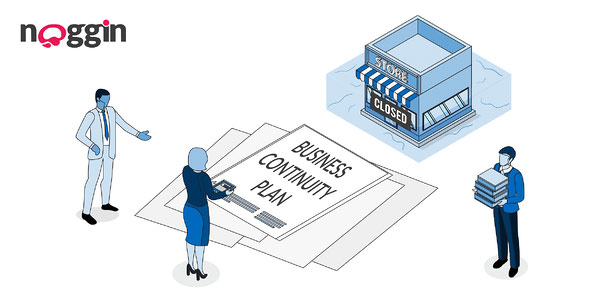
Post-crisis business closures weigh heavily towards companies that fail to develop business continuity plans (BCPs) before major incidents. But the length and depth of the COVID-19 crisis suggest that not just any BCP will do.
Instead, it’s absolutely essential that your client’s BCP accurately identifies, quantifies, and minimises potential interruptions and risks before a crisis happens. And to that end, best-practice certifications, like ISO 22301, help clients bolster their business continuity planning risk mitigation strategy as they adjust to the new normal.
Topics: Noggin Partners
New Challenges in Physical Security in the Age of COVID-19
Oh, how things have changed. Mere months ago, protective security entailed managing all physical security incidents, threats, and operations – reducing risks to keep people and physical assets safe.
Now, in the midst of an ongoing pandemic, organisations have had to redefine the mission of their physical security teams in an effort to ensure that employees and customers avoid likely health threats, specifically community spread of COVID-19.
Topics: Security Management
How to Pack a Punch with Your Business Case for Business Continuity Management
In the midst of the COVID-19 crisis, business continuity plans (BCPs), processes, and programs have never been in greater demand. But we’ve been here before.
Both the 11 September 2001 terror attacks and late 2000’s financial crisis spurred similar upticks in the popularity of business continuity management systems (BCMS). And yet, by the time COVID-19 came along, an alarming number of companies were unprepared.
Why didn’t business continuity management take off before; and how can you build a sustainable program today?
Topics: Crisis Management, Business Continuity
How to Teach Your Clients to Take a Dynamic Approach to Crisis Management Planning
Ensuring compliance with regulatory requirements is critical to your client’s business. But crisis and business continuity planning – often mandated by law – shouldn’t be a box-ticking exercise. Unfortunately, too many of your clients fall into the trap. What risks do they face treating crisis preparedness as a compliance-first practice?
First things first: regulatory mandates following crises are ubiquitous – that’s been the case far before the onset of the COVID-19 crisis. In the U.S., for instance, employers with more than ten workers must have written emergency action plans that specify what workers and others at the workplace should do in the event of an emergency.
Topics: Crisis Management, Noggin Partners
How to Manage Interoperability in the Age of COVID-19
Mere days into the hurricane season, the Atlantic basin is already experiencing its third named storm. Meanwhile, China, faced with flooding in its south and east, is upping flood defense emergency response to level III. Western Australia, for its part, is less than a month removed from a “once-in-a-decade storm,” so dubbed by the state’s acting commissioner of Fire and Emergency Services.
Topics: Emergency Management
Avoid One-Size-Fits-All Strategies When Planning for a Safe Return to Work
For many organizations whose physical operations were forced to close due to COVID-19-induced lockdowns, reopening day is coming soon. Indeed, employers are busy planning for a safe reopening as the day approaches.
While planning matters, it’s the quality of those plans that will determine whether a safe reopening is possible. And as it turns out, too many organizations follow one-size-fits-all strategies that can actually compromise the safety of returning employees, imperiling business recovery from the crisis. How, exactly?
Topics: Work Safety
The scale of the COVID-19 disruption to what had long been normal working arrangements has been unprecedented. Take remote work: an early April 2020 MIT survey revealed that nearly a third of all workers in the U.S. who had been employed the month before were working from home, up from five percent in 2017.
Topics: Crisis Management
Noggin 2.0 Now Hosted in the AWS Canada (Central) Region, Ensuring Data Sovereignty for Canadian Customers
We’re proud to announce that our Noggin 2.0 integrated safety and security platform is now available in the AWS Canada Region, in addition to other generally available Noggin 2.0 zones around the world. Launched in December 2016, the Canada Region enables AWS customers in Canada to store data locally and address regional data compliance requirements.
Topics: Security Management
Developing a Best-Practice COVID-19 Business Recovery Plan for Your Clients
At the outbreak of the COVID-19 crisis, more than 70 percent of employers admitted not having a pandemic plan in place. That glaring lack of planning suggests that your clients might not be as prepared as they think to resume normal working operations, now that the conversation has shifted to business recovery.
Topics: Crisis Management, Noggin Partners