




















.svg)
.svg)
.svg)
Welcome to our newest blog series ‘Get to know Noggin OCA’. This series will highlight features of our enterprise resilience software platform, Noggin OCA, that help all types of business manage disruption, smarter. The next 4 blogs will focus on the key features that help organizations efficiently and effectively manage resources during an emergency.
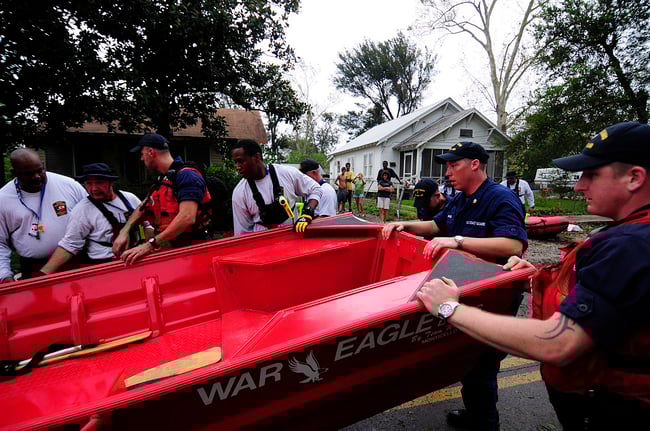
Photo by Matt More/FEMA [CC BY 2.0 (https://creativecommons.org/licenses/by/2.0)], via Wikimedia Commons
Efficiently deploying resources in time-sensitive emergency situations isn’t easy. Just take search-and-rescue (SAR). Time is absolutely crucial in those operations, as the possibility of success rapidly dwindles with the passing of days, if not hours.
That’s not all. During an active emergency, managers can’t always be certain of the available resources they’ll have at their disposal. Often, they’ll have too few resources. But it’s not uncommon to have too many. That’s because people and organizations often show up at major disaster sites without having been requested. It’s called convergence, i.e. the mass movement or attempted movement towards a disaster site.
Indeed, convergence brings badly-needed resources to a relief effort. But it doesn’t always do so efficiently. We often see this pattern play out in the case of multi-agency response to large-scale emergencies. In that context, separate organizations routinely request the same resources without informing peer organizations.
Of course, the solution for efficient resource allocation isn’t siloing the function outside of the larger emergency response framework. Resource allocation functionality has to fit into pre-existing asset and emergency management systems and frameworks in order to help managers efficiently notify and activate their best, most proximate resources, be they personnel, technologies, funds, supplies, facilities, etc.
So what can be done? A flexible decision-support system can certainly help teams assign resources based on schedules, while fitting different types of pre-existing procedures. The resource assignment feature in Noggin OCA, our all-hazards, incident management platform, offers a unified way to manage the selection, assignment, dispatch, and rostering of people and assets. With Noggin OCA, managers can define roles for each resource they need, including requirements needed to fulfill those roles. Managers can also find and rank candidates, communicate with and confirm those candidates, as well as create and manage rosters.
That’s not all. OCA also helps managers build predefined templates for resources structures. So when an event actually occurs, managers are ready to quickly deploy people and assets based on those structures and assignments. To learn more about Noggin, request a demonstration:

Follow us on Twitter @TeamNoggin stay tuned for part 2 next week!
.svg)