




















.svg)
.svg)
.svg)
Crisis can just as easily arise from a single devastating event, as it can from a series of unattended critical events. But either way it happens, crisis can present a serious threat to a business’s core objectives, reputation – even its viability. What’s more, crisis, once underway, doesn’t just burn bright, then suddenly extinguish. That’s because crisis is by definition multilayered and multidimensional. In order to properly prepare for, manage, and recover from crisis, companies need a strong crisis management function, one that anticipates crisis. So what’s the key – continuously improving your crisis management planning and preparedness through a crisis lifecycle management approach. Let’s dive in.
A concept familiar to marketers from the product lifecycle, the crisis management lifecycle starts with a few basic stages. The idea being that if you correctly identify each stage, you’ll be better equipped to make decisions appropriate to that stage, with the end goal of recovering efficiently from crisis.
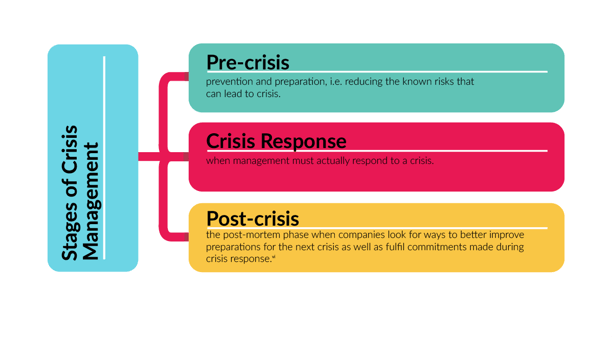
The Stages of Crisis Management
The basic stages of crisis are as follows:
-
Pre-crisis. As the name implies, the focus at this point is on prevention and preparation, in other words, reducing the known risks that can lead to crisis.
-
Response. Now, you’re in the thick of it. This stage deals with the actual response to a real, live crisis.
-
Post-crisis. All great crises must come to an end. But that doesn’t mean they won’t reoccur, especially if companies don’t undertake this final, post-crisis stage. During this phase, companies will take the opportunity to look back and reflect. They create a post-mortem to see what went wrong, which helps them think of ways to better prepare for the next crisis. It’s also when companies begin fulfilling the commitments they made while the crisis was still raging.
Understanding that beginning, middle, and end-framework to the crisis management lifecycle is just a start though. A crucial start, but a start all the same. That’s because the stages of crisis don’t break down that neatly. Advanced crisis management techniques rely on a more strategic, cyclical lifecycle approach. I’ll lay out one formulation of the crisis management lifecycle here:
- During the first, build up stage, you’ll see hints of a potential crisis brewing, often on social media. At this point, you should be looking for certain repeat messages that foreshadow crisis.
- By the impact stage, that earlier trigger has now morphed into a full crisis. You should expect to get the most media scrutiny at this point. But it’s not over yet…
- Because during the chronic crisis stage, the media usually shifts the script from what’s happening to who’s to blame. Meanwhile, a crisis-sieged company is still suffering through the effects of impact, which can be as significant as physical restoration.
- Eventually, you’ll get to the resolution stage when the crisis-hit company is up, running, and (hopefully) out of the media glare. But if this stage doesn’t include deep analysis and investigation, that company is basically just biding its time, waiting for the next crisis to strike.
To learn more about preparing for crisis, read our Guide to Getting Started with Crisis Management:

For more news and updates, follow Noggin on Twitter and LinkedIn.
.svg)