




















.svg)
.svg)
.svg)
By now, the case for interoperability, especially the efficient transfer of relevant data between agencies – otherwise known as interoperability in information management – is clear. Just take a look at many post-emergency, after-action reports; most cite a lack of interagency cooperation as contributory to mission setbacks, or even failures. Of course, one of the best examples in recent memory: poor interagency cooperation between New York City responders during 11 September.
But achieving any level of interoperability, much less interoperability in information management, is easier said than done. The key stakeholders, the agencies themselves, will often be working across jurisdictional and/or regional lines, creating a veritable, logistical nightmare.
That’s not all. Both public and non-governmental agencies rely on funding streams, which can be unpredictable and fragmented. Suffice it to say, when an agency’s finance team sits down to budget for the next year, working better with other organizations might not be top of mind.
What’s more, some agencies, at least key decision makers at those agencies, aren’t necessarily aware that they need to prioritize interoperability, though awareness has improved over the years. It’s usually only after an unexpected incident has unfurled that an organization will fully appreciate the crucial need to cooperate better with partner agencies. By then, it’s usually too late.
While significant, those human and financial factors aren’t the most common challenges organizations face to achieve interoperability (in information management). The three most common challenges are as follows:
1. Lack of planning. It sounds banal, but an organization can’t have interoperability without interagency planning. That’s because agencies have to identify the roles and responsibilities for personnel dealing with unexpected incidents, as well as lay out how specific people (within that organization) will work in coordination with responders at partner agencies.
2. No time (or expertise) for training. Then again, planning is only the first step (of many). After the plans are hatched, agencies will still need to bring those plans to life. That, of course, entails training technical administrative personnel (often alongside with those at partner organizations) on their roles and responsibilities.
There are various reasons why those trainings fall by the wayside though. Senior stakeholders are often too busy to train personnel. Or, they might not have the interoperability experience themselves to make trainings effective (or the budget to bring in third parties). Finally, including partner organizations in trainings adds another layer of logistical difficulty.
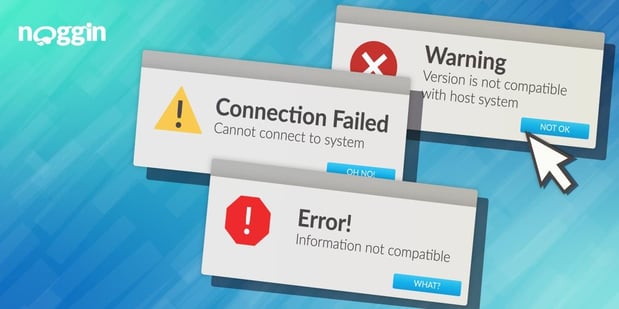
3. The systems don’t sync. Agencies who clear those first two hurdles still have another major challenge facing them. They need the right technologies to enable interagency cooperation.
This is a huge problem. Many analysts have noted that across industry there’s already a dire need for better technology to support both interagency and intra-agency collaboration and communication during emergency response. Case in point: you’ll often hear responders in the field bemoan information-overload during emergency response. There, the culprit is usually a lack of appropriate electronic messaging tools.
Here again, agencies working with limited financing won’t necessarily have the requisite budgets to upgrade their aging equipment, much less procure the best technologies on the market. Moreover, even those teams who purchase next-gen technologies might find that those services aren’t always compatible with a partner agency’s solution stack.
To learn more about interoperability, download our Guide to Achieving Interoperability in Information Management.

For more content on emergency management response , follow @TeamNoggin on twitter
.svg)